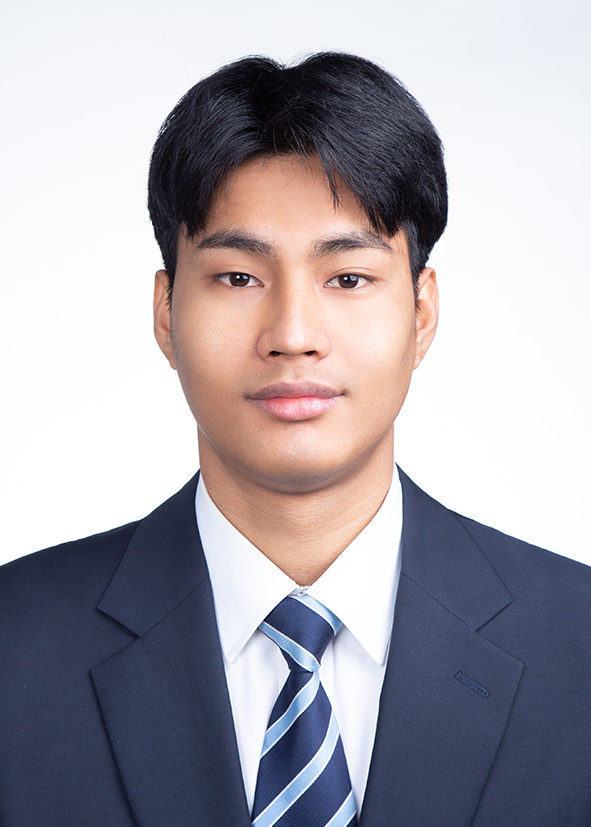

Thura Win Kyaw

I work at the intersection of Artificial Intelligence and Conversational Systems, focusing on building practical, end-to-end AI applications, alongside my studies toward a Bachelor’s degree in Electrical Engineering at Chungnam National University. My recent work centers on RAG, LangChain, Prompt Engineering and LLM-powered chatbots, where I design systems that combine vector databases, structured knowledge, and local LLMs (via Ollama) to produce reliable, grounded responses. I enjoy turning research ideas into working systems — from retrieval pipelines and prompt orchestration to backend services and evaluation workflows — with an emphasis on robustness, clarity, and real-world usability.

Experience


Dec 2024 – Present
AI, Software, Prompt Engineer at AIdenBio, Daejeon, KR
  • Designed and maintained backend systems focusing on AI model integration, API development, and database management.
  • Engineered and optimized prompts for Large Language Models (LLMs) for personalized, context-aware responses.
  • Developed and deployed Retrieval-Augmented Generation (RAG) pipelines improving output accuracy and relevance.
  • Contributed to building intelligent, production-grade systems for life sciences and biomedical applications.
Oct 2025 – Nov 2025
AI Software Engineer Intern at GRINDA AI, Daejeon, KR

Built an AI-powered Slack bot that automatically converts Slack issue reports into structured GitHub issues using Claude AI and FastAPI, with auto-labeling, translation, and monitoring.

Education


B.E. in Electrical Engineering, Chungnam National University Sept 2022 – Present
  • Relevant coursework: Computer Programming (C), Computer Scientific Thinking, Linear Algebra, AI and Future Society, Modern Control Theory and Design, Sensor and Measurement Engineering
  • Certifications: HarvardX: CS50's Introduction to Programming with Python, CS50: Introduction to Computer Science, CS50's Introduction to Artificial Intelligence with Python

Skills


Programming Languages

  • Python
  • C
  • MATLAB

AI/ML

  • Retrieval-Augmented Generation (RAG)
  • LangChain
  • Prompt Engineering
  • Vector Databases
  • LLM-Powered Chatbots
  • Local LLM Deployment (Ollama)

Tools & Technologies

  • VS Code, Cursor, Git, GitHub, Docker
  • Notion, Google Workspace, MS Office

Operating Systems

  • Windows
  • Linux
  • Mac

Languages

  • Burmese (Native)
  • English (Fluent)
  • Korean (TOPIK 5)

Projects


1. ChatPDB - Protein Structure Visualization Assistant

LLM, RAG, PyMOL, FastAPI

An intelligent assistant that interprets natural language queries to visualize protein structures. Integrates LLMs with RAG for semantic understanding and PyMOL for interactive 3D rendering.

2. Iris Flower Classification

SVM, Scikit-learn

Supervised SVM model to classify iris species with StandardScaler preprocessing, GridSearchCV tuning, and evaluation via accuracy, confusion matrix, and classification report. Visualized decision boundaries with PCA and saved the best model pipeline for reuse.

3. Customer Segmentation

K-means Clustering

Unsupervised K-means clustering on synthetic customer data (age, income, spending) to identify actionable segments. Used StandardScaler preprocessing, elbow and silhouette analysis for k selection, and cluster visualizations; saved the trained model and scaler for reuse.

4. Text Classification

NLP, TF-IDF, Naive Bayes, Logistic Regression, SVM

Built a supervised text classifier with TF-IDF features, multiple models (Naive Bayes, Logistic Regression, SVM), and GridSearchCV tuning. Evaluated with accuracy and precision/recall/F1, visualized results, and saved the model, vectorizer, and label encoder for deployment.

5. Quote Sentiment Analysis

NLP, Sentiment Analysis, VADER, Naive Bayes, Logistic Regression

Built a sentiment analysis pipeline for short quotes by scraping data with requests and BeautifulSoup, labeling with VADER, and training Naive Bayes and Logistic Regression models. Evaluated with confusion matrices and visualizations like sentiment distributions and word clouds.